
Most People Quit When They Should Have Repositioned
What Hollywood knows about failure that the rest of us don't

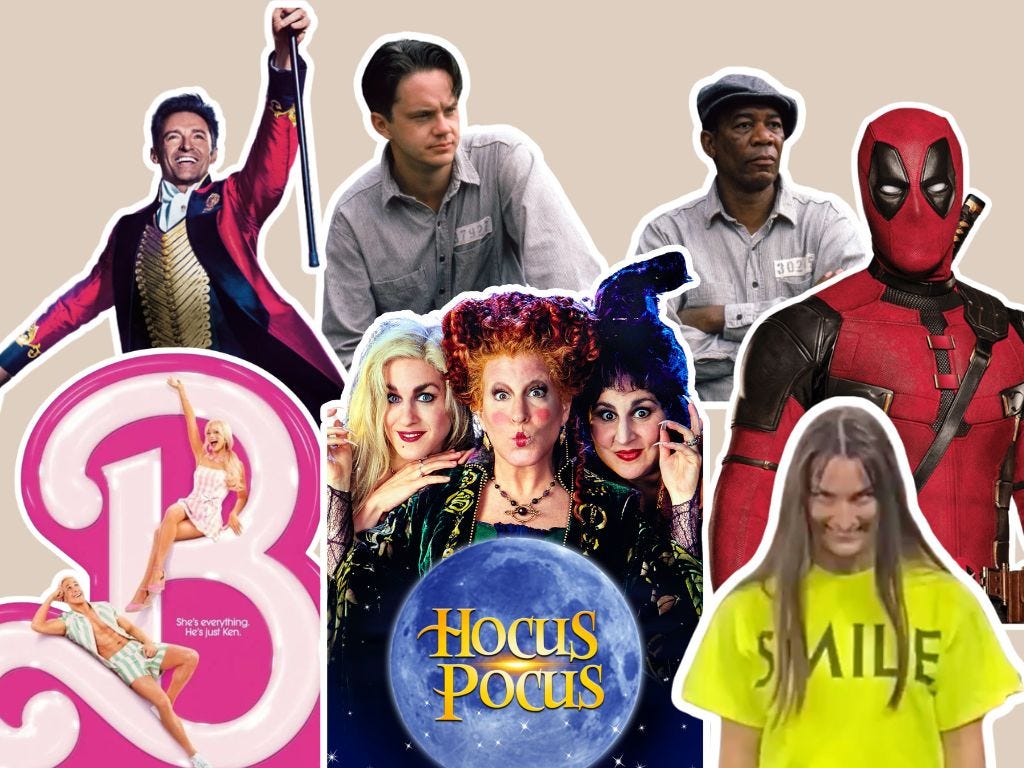
Hollywood judges a movie by its opening weekend.
If the numbers don't hit by Sunday morning, the industry calls it a flop and moves on. Doesn't matter if the film is brilliant. Doesn't matter if it survived years of development hell and took a decade to get made. Seventy-two hours, verdict delivered.
We do the exact same thing to ourselves.
We launch a business and nobody signs up the first month. We start a Substack and get twelve subscribers. We pitch a new direction and hear crickets. And we conclude the product, us, failed.
Here’s what twenty years of marketing across the biggest entertainment brands and studios has taught me: most of the time, the movie isn’t the problem. Sometimes it is — sometimes the movie is bad and can't be saved. But usually it's a positioning problem, and the smartest studios in the world know how to change the story they're telling about it.
If a campaign isn’t working, the team has to decide: kill it, or reframe it? More often than not, the question was how do we tell a better story about the one we already had.
So if something in your life feels like it’s flopping right now, stay with me. You might not be a flop. You might be mispositioned.
What We Can Learn From Hocus Pocus
In July of 1993, Disney released a Halloween movie.
Not near Halloween. In July!!! Hocus Pocus opened against The Firm, Jurassic Park, and In The Line of Fire, landing in fourth place at $8.1M. Overall, it made about $39.5M against a $28M budget. Roger Ebert gave it one star.
Today it is one of the most beloved Halloween films ever made, with a massive 2022 sequel, a third in development, and a permanent October television franchise.
Nothing about the movie changed. Not one frame was recut. What changed was when people encountered it and what they thought it was. More on that below. The bottom line is that the film wasn't bad, it was mispositioned.
Hollywood’s repositioning machine that kicks in when something underperforms is one of the most sophisticated capabilities in entertainment and almost nobody outside the business knows it exists.
If you are a person whose career stalled, whose business isn’t converting, whose newsletter isn’t growing, whose expertise isn’t landing, you’ve almost certainly diagnosed it as a quality problem. Not good enough. Not smart enough. Not far enough along.
But I’d bet real money it’s a marketing problem. Here are six moves to reposition your story without rebuilding everything you've already worked so hard on.
Move 1: Kill the Old Version. Change the Promise.
The first time the world saw Deadpool was in X-Men Origins: Wolverine in 2009. Fox took a character beloved for being loud, irreverent, and self-aware, and sewed his mouth shut. Fans hated it. The character was considered dead.
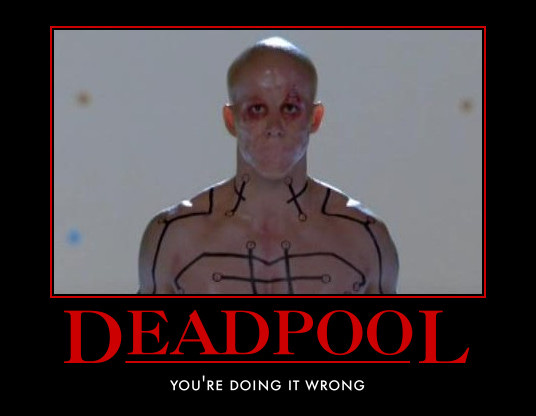
For years Fox refused to greenlight a proper film. An R-rated superhero movie was too risky, and the character had already bombed once. Then in 2014, test footage "leaked" online. It showed the real tone, irreverent, fourth-wall-breaking, funny, and went massively viral. Fox finally greenlit it with a $58M budget, half what a superhero film normally gets.
Then marketing did something brilliant. They didn't sell a superhero movie. They released it on Valentine's Day and sold a romantic comedy. Heart-shaped billboards. Emoji posters.
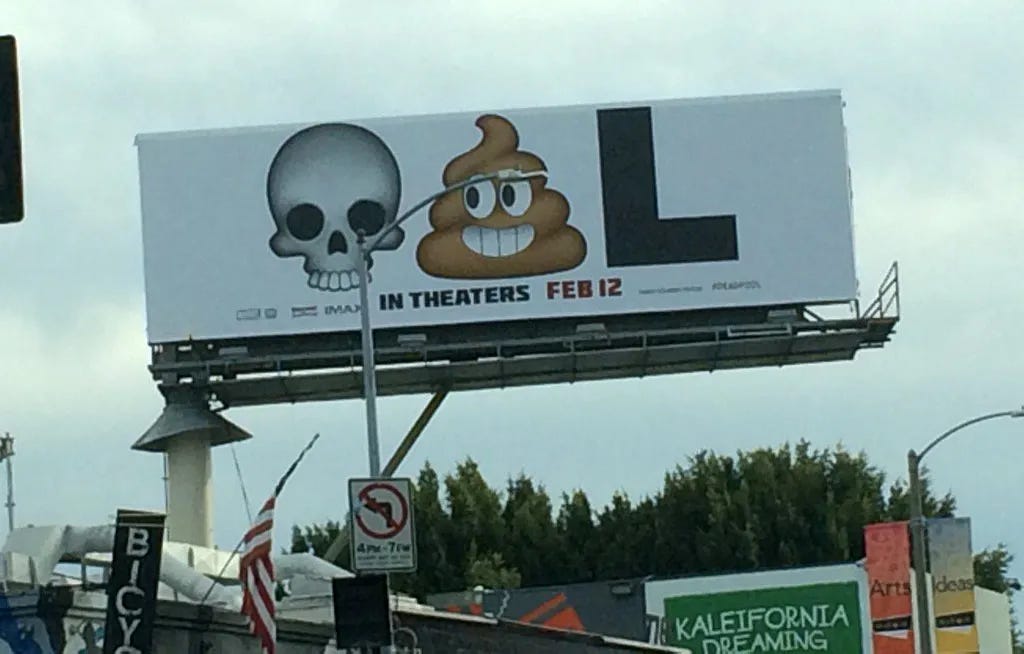
Result: $782.6M worldwide. The highest-grossing R-rated film in history at the time.
Same character. Same actor. Different packaging.
That’s what studios do first. Not touch the product, they cut a “new trailer.” Same footage, different promise. When a comedy is being sold as a drama, you don’t reshoot. You re-cut.
Your version: your trailer is your LinkedIn headline, your About page, your bio, the sentence you say when someone asks what you do. It’s the first fifteen seconds of every encounter you have.
Most people reposition by making new work. That’s the expensive move and usually the wrong one. Your body of work is footage. It can be assembled into more than one story.
Ask: if someone saw only my bio and my three most visible pieces of work, what would they think I do? Is that what I want to be hired for?
On Substack specifically: your About page, header line, and pinned post are your trailer. Rewriting all three costs an afternoon and changes what every new visitor thinks they're subscribing to. Most people rebrand by publishing more essays. The packaging is where the leverage is.
Move 2: Lean Into the Criticism
By 2023, Barbie had been culturally dead for a decade. Anti-feminist. Unrealistic body standards. A punchline serious people didn't take seriously. Mattel could have fought it, released a campaign insisting Barbie was actually empowering. That's what most brands do.
Instead they leaned in. The tagline: If you love Barbie, this movie is for you. If you hate Barbie, this movie is for you.
They named the baggage out loud, then subverted it. The film was a feminist critique of Barbie wrapped inside a Barbie movie. Barbie wasn’t a movie that I was running to the theaters to see, until I saw all the hype, and it lived up to it.
Result: $1.44B globally. 165 brand partnerships. An AI selfie generator that 13M people used.
The brand didn’t change. The story about the brand changed, and it only worked because they stopped running from the old narrative and started writing through it.
Your version: if people hold a stale narrative about you, the corporate lifer who got laid off, the person who “used to” have a big job and now makes content, the one starting over at an age that makes people uncomfortable, don’t fight it. Don’t pretend it isn’t there.
Acknowledge it, then rewrite from the inside. The move is “yes, AND.” Your history isn’t the obstacle. It’s the setup.